Ireland is the first country to have introduced a permanent basic income scheme for artists: 2,000 people will receive 325 Euro a week for three years. The program aims to reduce financial insecurity, enable creative work and boost the economy. This is also providing fresh impetus for the basic income debate in Germany.
By Mareike Graepel, Dublin
325 Euro a week isn’t enough to buy supplies, to rent a studio, or to spend a single day in a recording studio. In dear Ireland – the country with the second-highest cost of living in the EU after Denmark – that amount means just a little breathing space. A few days less spent in unrelated jobs, a few more hours at the canvas, typewriter or guitar. In Ireland, this little breathing space has a name: “Basic Income for the Arts“ — in spring 2026, a three-year pilot project became a permanent scheme. 2,000 professional artists will each receive 325 Euro a week from the state for three years.
“It’s basically survival money,“ says Maeve Clancy, a painter, illustrator and animator who lives on Achill Island in the west of Ireland. “It relieves people of massive financial stress, allowing them to focus on their work.“ But only a fraction of artists are eligible – more than four times as many applied for the basic income as there were funding pots available. Over 50,000 people are employed in the sector, but not all of them can apply. Only about a fifth work in the creative area and stand a chance of receiving the money. Maeve Clancy thinks nonetheless: “A basic income for some still helps everyone, because a rising tide lifts all boats, not just a few.“
Ireland is renowned for its high concentration of talent and consistently produces world-class musicians, actors and writers such as Enya, Jessie Buckley and Claire Keegan. To foster the nation’s creativity and encourage talent to stay in the country, all artists’ income was completely tax-free from 1969 to 2006. Then a tax-free allowance of up to €250,000 was introduced, which was subsequently reduced first to €125,000 and then to €50,000. “I don’t think the basic income today has anything to do with Ireland still valuing its artists,“ says Clancy. “It has proven to be economically sensible, and that makes it easier for the government to support this concept.“
Applicants must be able to demonstrate artistic practice, after which recipients are selected via a lottery. The Irish state expressly emphasises that this is not a universal basic income, but rather targeted support for the arts. Nevertheless, this lends the project a political dimension. Ireland is the first country in the world to organise a basic income – albeit only for one group – at state level.
That is a “huge step“, says Miriam Witz from the German association Mein Grundeinkommen and adds that one crucial factor often overlooked in the German debate: “It is not just a question of how people are doing, but also of what this means for a country economically.“
Ireland has been able to show the hard facts in the national accounts through an official cost-benefit analysis of the pilot project: for every euro of public money invested, there was a return of 1.39 Euro, whilst at the same time the net expenditure fell significantly due to tax benefits and lower social expenditure. There have been and continue to be initiatives around the world that are moving in a similar direction, on the African and American continents – but only in a limited or experimental form.
In Germany, the “Basic Income Pilot Project“ run by Mein Grundeinkommen, the German Institute for Economic Research (DIW), the Vienna University of Economics and Business, and the Institute for Employment Research provided an important insight: 122 people received 1,200 Euro a month for three years, whilst a further 1,580 formed the control group.
“We see that as self-determination increases, so do health, life satisfaction and the ability to make good decisions,“ says Witz. Nobody stops working, but people are more flexible, more secure, freer in their decisions – simply put: more autonomous. They do not work any less; their weekly working hours remain stable. But they change jobs more frequently, are happier with their working lives and make use of their scope for further training.

A basic income benefits 83 per cent of the total population
Conservative parties are in power in Ireland too – so why are politicians in Germany so hesitant when the positive effects are so hard to overlook? In the German pilot project, people on a basic income saved an average of 450 Euro more per month than the control group. They donated more than twice as much – an average of 28 Euro a month – to social or charitable causes and provided financial support to friends and family more frequently.
At the same time, there was no significant difference in voting behaviour or fundamental political attitudes. An unconditional basic income (UBI) does not make people passive or politically indifferent: it did not change their worldview overnight, but it certainly changed their scope for action.
“Many people don’t actually know what a basic income means in concrete terms,“ says Stefanie Schurmann, press spokesperson for Mein Grundeinkommen. “The debate focuses heavily on the idea that taxpayers would end up footing the bill and that it would only help people in precarious situations who really have nothing at all.“ However, the DIW’s calculations show very clearly that 83 per cent of Germans would benefit from this kind of redistribution.
“That is a huge figure, which in concrete terms means that these people would have more money in their bank accounts at the end of the month. Up to a net income of around 3.350 Euro – that is an income that many people in Germany do not even reach.“ Even if the top ten per cent were to bear a heavier burden, as calculated by the DIW, one must not forget: this group would still be significantly wealthier than the majority of the population.
“The problem is that politics often doesn’t operate on the basis of this evidence, but rather on the basis of vested interests,“ says Witz. “And ultimately, that’s also a question of the state of our democracy.” A basic income steps in precisely where people lack the freedom to act. “The issue of a basic income is often pigeonholed as a left-wing, utopian idea – as if it were economically naive,“ adds Stefanie Schurmann.
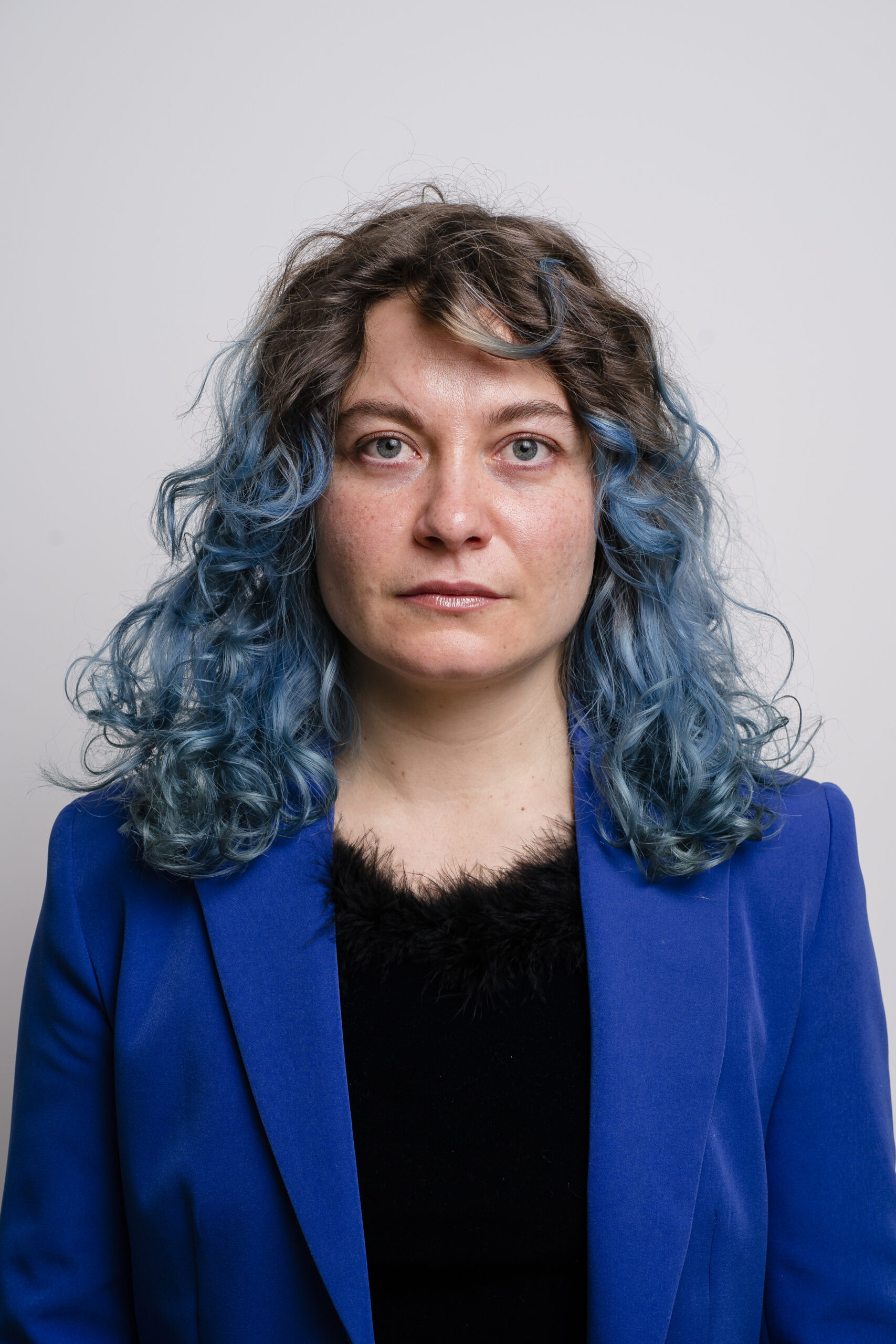
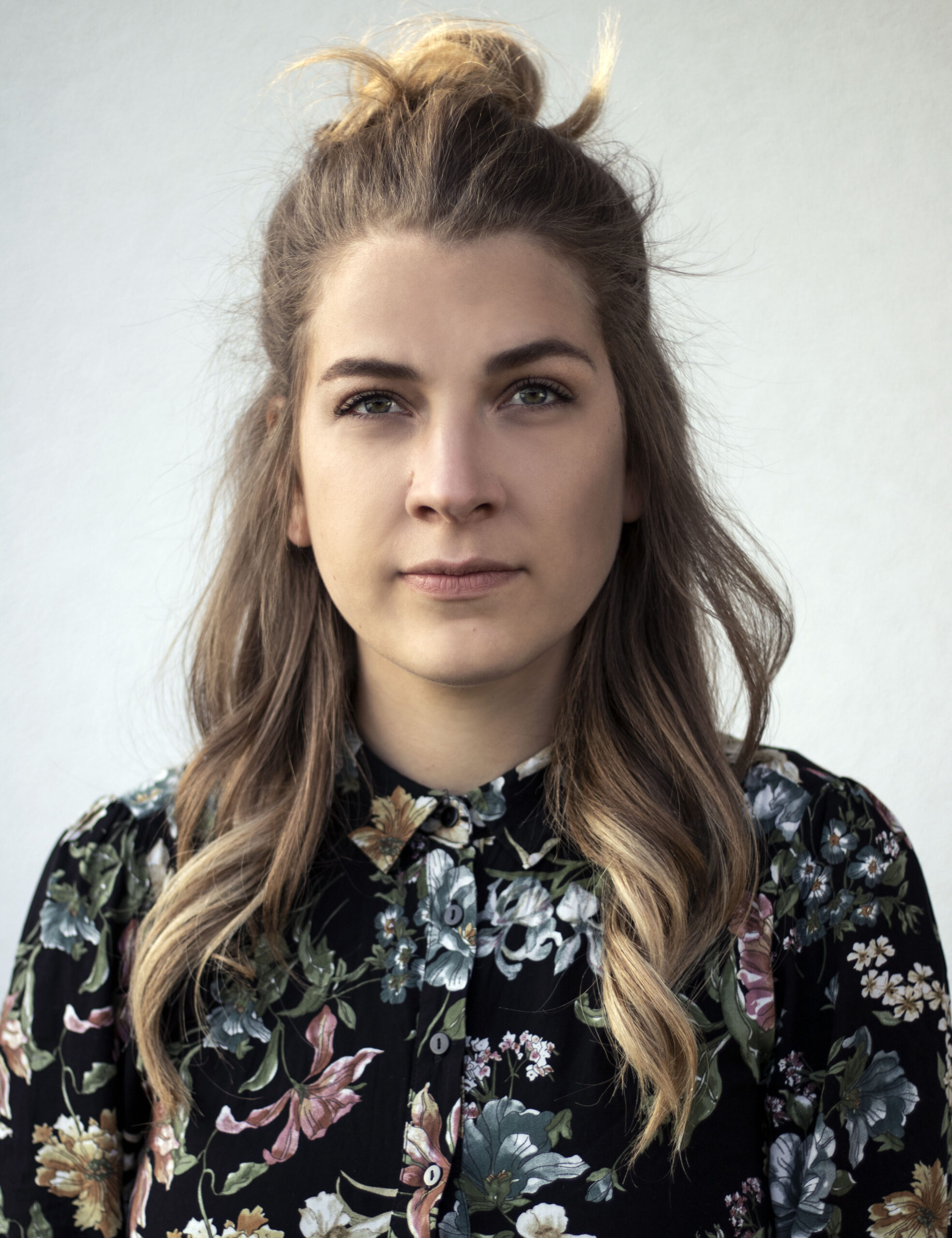
| Photos: Fabian Melber (left), Anna-Lena Schildt (right)
“But the point is to empower people so they can make better decisions. Ultimately, that’s good for the economy too.“ The concept’s political positioning may stem from the fact that the former leader of The Left party, Katja Kipping, has long been an advocate of a basic income, and her party is actively campaigning for it. However, the fact that Federal Minister for Digital Affairs Karsten Wildberger of the CDU now also believes that “an unconditional basic income can be part of the solution to cushion the upheavals in the labour market” could finally be another stepping stone on the path to a basic income in Germany.
It is interesting to note how differently fair such an idea can be. In Ireland, selection is not based on need but on professionalism: anyone who meets the criteria is entered into the lottery. Maeve Clancy believes this is fairer than other cultural policy selection processes, in which networks, judgements of taste and proximity to the scene play a role, because: “A lottery does not disadvantage anyone.“ At the same time, it becomes clear elsewhere just how complex the concept of fairness really is.
Although data from the Irish Arts Council shows that women are slightly over-represented in terms of the total value of funding awarded – they accounted for around 58.7 per cent most recently – a different effect was noticeable in the German pilot project: the sense of autonomy increased particularly strongly among women. Why is that? They are often poorer than men. Keyword: gender pay gap. Keyword: pension rights equalisation. Keyword: poverty in old age.
“We tried to factor out the gender gap, but wealth remains a key issue because, on average, women have significantly less of it,“ says Miriam Witz. “This is particularly evident in old-age poverty: among current generations of pensioners, the differences between men and women are considerable. If, for example, one were to think of a pension as a form of basic income, precisely such inequalities could be at least partially offset. This effect was clearly observable in the pilot project.“
Ultimately, it is worth looking beyond the test phases and trial runs to consider the bigger picture: in the world happiness report 2026, Finland ranks first. The report does not simply measure the ‘good mood’, but rather overall life evaluation. Finland is similarly prosperous to Germany, but distributes wealth more fairly and promotes a high level of social support within the country. When security is not the preserve of a select few, it becomes a reliable foundation for everyday life.
Basic income in other countries
The idea of a basic income is being trialled in various parts of the world – sometimes as a state-run scheme, sometimes as a time-limited pilot project. The approaches vary greatly: some payments are permanent but very low. Other projects specifically test how regular cash payments affect poverty, health, education, employment and social participation.
In Alaska, residents have received an annual payment from oil revenues since 1982. Macau has also been paying lump sums to its population since 2008. Both models are regarded more as partial basic incomes, as they do not guarantee a minimum subsistence level. Similar resource-funded programs have existed at times in Iran and Mongolia.
In Wales, a pilot project is underway for young people aged between 18 and 21 who have been in state care: they receive £1,600 a month for up to two years. In Finland, 2,000 unemployed people received a basic income for two years. The evaluation showed, among other things, reduced stress, fewer depressive feelings and improved concentration.
One of the best-known experiments was the Canadian ‘Mincome’ project in the 1970s. The small town of Dauphin was to become a “city without poverty”. The project was terminated prematurely due to a recession, but subsequent evaluations point to positive effects: better health, no crisis in the labour market, more stable consumption – and better school results among children.
In addition, there are numerous regional pilot projects worldwide, for example in Namibia, Kenya, the USA, Brazil, the Netherlands and India.